
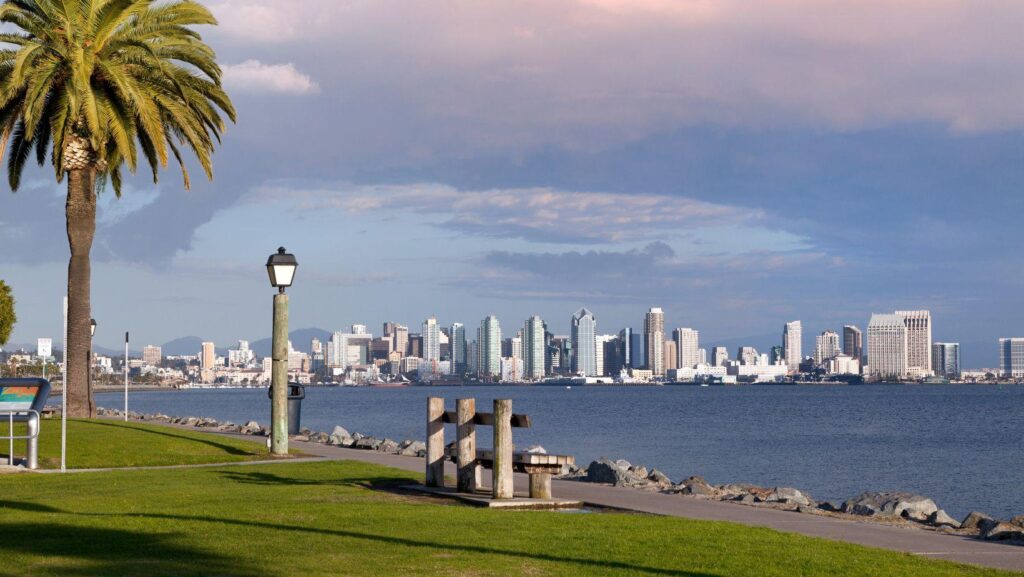
San Diego’s waterfront is easy to experience without ever really getting on the water. You can walk the Embarcadero, visit the USS Midway, stop at Seaport Village, photograph the Coronado Bridge, and still come away having seen only a small part of what the city’s bays and coastline have to offer.
The difference becomes obvious when you leave the busiest stretches behind. San Diego has working marinas, quiet parks, residential shorelines, protected wildlife habitat, and stretches of coast where the city suddenly feels much farther away. From the water, these places begin to make sense as parts of one larger landscape. A marina that looks like a small section of the shoreline from land can become a busy community of boats and waterfront activity when you pass it by boat. The downtown skyline becomes part of the scenery, while Coronado and Point Loma take on an entirely different scale.
That makes exploring by water especially appealing for travelers who have already seen the obvious attractions. You remain close to the places that make San Diego recognizable, but you have the chance to see quieter corners and spend time on the bay at a more relaxed pace. The best route depends on what you want from the day, so there is little reason to try to cover the entire waterfront in one outing.
Harbor Island Is a Good Place to See the City From a Distance
Harbor Island sits close to downtown and San Diego International Airport, yet its position in the bay gives it a surprisingly open feel. The waterfront has restaurants, public spaces, walking areas, and broad views across San Diego Bay toward downtown and Point Loma. It is also part of the Point Loma area that San Diego’s tourism organization identifies as one of the city’s major boating and waterfront districts.
From shore, you can watch boats move between the nearby marinas and look across the water toward the downtown buildings. From a boat, the perspective changes considerably. Downtown becomes part of the larger bay rather than a wall of buildings immediately in front of you, while Point Loma gives the western horizon a completely different character.
The airport adds another interesting element. Depending on the time of day, you may see aircraft approaching the nearby runway while boats move across the bay below. It is an unusual combination of urban activity and waterfront scenery, and it gives Harbor Island some character of its own.
This is a particularly good area for travelers who want an easy introduction to the quieter side of San Diego Bay. You can spend time around the island before or after getting on the water, making it easy to build into a larger day around Point Loma, Shelter Island, or downtown.
Shelter Island Feels More Connected to Boating
Shelter Island has a stronger nautical character than Harbor Island, and you notice the difference almost immediately. The area is surrounded by marinas, waterfront restaurants, public spaces, and boating facilities. San Diego’s tourism organization describes it as a recreational and boating hub within the Point Loma peninsula, only minutes from downtown.
The boats here are part of everyday life rather than something arranged for visitors to look at. Sailboats sit in their slips, crews prepare vessels for the day, and people move between the docks and surrounding businesses. From the water, you get a better sense of how much activity is packed into this part of the bay.
Shelter Island also works well when you want flexibility. You can walk along the waterfront, stop for a meal, spend time around the marinas, and then head out onto the bay without having to organize the entire day around sightseeing.
For travelers who enjoy the atmosphere of a working marina, this is one of the most rewarding places to linger. The shoreline has enough activity to keep things interesting, but it rarely feels as concentrated as the main downtown waterfront.
Point Loma Brings You Out Toward the Pacific
The scenery changes once you move toward Point Loma and the entrance to San Diego Bay. The protected harbor gives way to a more exposed coastline, with rocky cliffs and open Pacific water replacing the calmer surroundings of downtown and the inner bay.
Point Loma is worth exploring from land, particularly around Cabrillo National Monument, but the coastline has a different presence when viewed from the water. The cliffs rise directly from the ocean, and the shape of the shoreline becomes easier to appreciate as you move alongside it. Instead of looking down at the coast from an overlook, you are seeing the rock formations from the water and watching the landscape change as you travel.
This is also where conditions deserve more attention. Water outside the protected bay can behave differently from the areas around downtown, particularly when wind and swell increase. Travelers who prefer a calm sightseeing experience may be happier staying within the inner bay, while those who want open coastal scenery can consider Point Loma when conditions are appropriate.
That contrast is part of what makes this area interesting. Within a relatively short distance, San Diego can shift from an urban harbor filled with boats and buildings to cliffs, kelp, seabirds, and open ocean.
Coronado Looks Different From the Bay
Most visitors experience Coronado by crossing the bridge, arriving by ferry, or exploring the island on foot. All three can be worthwhile, but seeing the shoreline from the bay gives you another way to understand the area.
From offshore, the beaches and developed shoreline become part of one continuous landscape. You can look toward Coronado while also seeing downtown across the water, which makes the relationship between the island and the rest of San Diego much easier to appreciate.
The Coronado Bridge is another reason to look at the island from the water. From below, its size becomes much more apparent, and the distance from shore gives you enough perspective to see the full curve of the structure.
Coronado does not need to be the entire focus of a boat outing. It works particularly well as part of a broader route around San Diego Bay, especially if you want to combine skyline views, island scenery, marinas, and open stretches of water.
Mission Bay Is Better for Recreation Than Traditional Sightseeing
Mission Bay deserves separate consideration because it is a different kind of waterfront experience altogether.
The City of San Diego describes Mission Bay Park as the largest aquatic park of its kind in the country. The park covers more than 4,235 acres, with roughly equal portions of land and water, and has about 27 miles of shoreline. Boating, sailing, paddling, waterskiing, swimming, cycling, and walking are among the activities available throughout the area.
That makes Mission Bay a better choice for travelers who want to spend time on the water rather than move between sightseeing landmarks.
You can rent a boat, kayak, or paddleboard, or simply spend time around the parks and shoreline. Families may find it especially convenient because people can split up and choose different activities without having to leave the area.
There is also some interesting history behind the landscape. Mission Bay was once a tidal marsh. Beginning in the 1940s, major dredging and development projects transformed it into the recreational waterway visitors know today.
That history is easy to miss when you are focused on the beaches and recreational facilities, but it explains why the bay looks so different from the more naturally rugged coastline around Point Loma.
Look Toward the Southern Bay for Wildlife
The southern end of San Diego Bay offers a completely different experience from downtown.
The San Diego Bay National Wildlife Refuge protects approximately 2,620 acres of land and water across the Sweetwater Marsh and South San Diego Bay units. The U.S. Fish and Wildlife Service identifies the area as important habitat for native, migratory, threatened, and endangered species, including some of the remaining coastal salt marshes and intertidal mudflats in the region.
This is the part of the bay that will appeal most to travelers interested in birds and coastal habitat. The refuge recommends areas such as Sweetwater Marsh and the Bayside Birding and Walking Trail for wildlife observation.
If you plan to explore this area by boat, however, check the current rules before going. Boating and kayaking are permitted only in designated open water areas within the refuge. Those areas are shallow and designated as no wake zones, while marsh and wetland habitat is closed to boating.
That distinction matters. This is a place where sightseeing should take a back seat to protecting the environment. Keeping your distance from wildlife and following access rules makes the experience better for everyone.
Spanish Landing Is an Easy Place to Slow Down
Spanish Landing Park does not have the name recognition of the USS Midway or Coronado, and that is part of what makes it useful.
Located along the bay near the airport, the park provides open waterfront space for walking, picnicking, and sitting beside the water. It is a convenient place to take a break if you are already exploring Point Loma, Liberty Station, or Harbor Island and want somewhere quieter.
From the shoreline, you can watch boats cross the bay and look toward the surrounding waterfront. It is also an easy place to visit with a group when everyone wants something different. One person can walk along the water, another can sit and enjoy the view, while someone else takes photographs.
It is a simple stop, but it fits naturally into a day that is more about enjoying the waterfront than collecting attractions.
Pay Attention to the Working Harbor
San Diego Bay is beautiful, but it is also a working harbor. That becomes much easier to appreciate when you move away from the most polished tourist areas.
Commercial fishing, maritime businesses, recreational boating, and large vessels all share the bay. Tuna Harbor offers one of the clearest reminders that the waterfront serves purposes beyond tourism. The area remains connected to San Diego’s commercial fishing industry, giving visitors a glimpse of the boats, docks, and people who continue to work on the water.
This is worth paying attention to when you are exploring. A fishing boat returning to the harbor, a crew working around a dock, or sailboats heading out for the afternoon can tell you something about San Diego that a conventional attraction cannot.
It also helps explain why seeing the bay from the water can be so interesting. You can observe recreational boats, working vessels, marinas, parks, neighborhoods, and major landmarks sharing the same body of water.
Give Yourself Time for a Proper Boat Outing
There is a temptation to squeeze a boat trip into an already packed itinerary. If you have an hour available, you take an hour. If you have another attraction scheduled immediately afterward, you start watching the clock.
That approach works, but it misses part of what makes being on the water enjoyable.
A more relaxed outing gives you time to look around without constantly wondering what landmark comes next. A local operator such as Tiki Time Bay Tours can suit travelers who want to spend time on San Diego Bay at an easier pace. For anyone looking for a San Diego boat ride, the experience becomes much more enjoyable when it is treated as time to explore rather than another item to check off a list.
The shoreline looks different as you move through the bay. A marina changes as you approach it and then pass it behind you. Downtown takes on a different shape from different parts of the water. Coronado and Point Loma seem to change in size depending on where you are.
Those details are easy to miss when you are standing on shore because you are looking at a fixed view. On a boat, the landscape keeps changing around you.
Choose Your Route Based on the Kind of Day You Want
There is no single route that makes sense for every traveler.
For a relaxed day centered on city views, Harbor Island, Shelter Island, downtown, and Coronado make a natural combination. These areas keep you within the central bay while offering skyline views, marinas, historic waterfront scenery, and island views.
For a more natural experience, Point Loma is the stronger choice. The scenery shifts toward cliffs and open Pacific water, although marine conditions should be checked before heading out.
Mission Bay makes more sense when recreation is the priority. Its size and extensive facilities allow you to spend several hours on the water without running out of things to do. The City of San Diego provides current information about park conditions and facilities, which is useful when planning a longer visit.
Wildlife enthusiasts should allow more time for the southern bay. Check the refuge’s current visitor information and boating rules before planning an outing because access differs between areas and protected habitat must be given plenty of space.
Choosing the Right Waterfront Experience
|
If You Want |
A Good Place to Start |
Why It Works |
|
A relaxed afternoon on calm water |
San Diego Bay |
The protected bay is well suited to sightseeing at an easy pace |
|
Dramatic coastal scenery |
Point Loma |
Cliffs and open Pacific water create a much wilder setting |
|
A day centered on boating |
Shelter Island |
Marinas and boating facilities are a major part of the area |
|
Family friendly water activities |
Mission Bay |
There is plenty of room for boating, paddling, and other recreation |
|
Wildlife and nature |
Southern San Diego Bay |
Protected wetlands provide important habitat for birds and other wildlife |
|
Skyline and sunset scenery |
Harbor Island or Coronado |
Both provide broad views across the bay toward the city |
The Best Time to Get on the Water Depends on Your Priorities
Morning is a good choice if you want calmer surroundings and softer light. The bay tends to feel less busy before recreational activity reaches its peak, and the early hours can be particularly pleasant around the marinas.
Afternoon brings more activity. More boats are out, the waterfront is busier, and Mission Bay can feel especially lively.
Later in the day is a good option when scenery matters most. The light becomes warmer, the skyline takes on a different appearance, and the waterfront begins to settle as the day winds down.
The body of water you choose also matters. Conditions inside protected sections of San Diego Bay can be very different from those around Point Loma and the open Pacific. A calm day on land does not guarantee identical conditions offshore, so checking the forecast and following your boat operator’s guidance is always sensible.
Do Not Try to See Everything in One Day
San Diego’s waterfront is large enough that trying to cover every interesting location in a single day can turn a relaxing outing into a transportation schedule.
Choose a few areas that complement one another instead.
You could spend the morning around Shelter Island and Point Loma, have lunch near the waterfront, and spend the afternoon on the bay. Another day could focus entirely on Mission Bay, where there is enough water and shoreline activity to keep you occupied for hours.
If wildlife is your main interest, give the southern bay the time it deserves rather than trying to squeeze it between several downtown attractions.
Leaving room in the schedule is particularly important when you are exploring by boat. The whole point is to enjoy being on the water, and that becomes difficult when you are constantly thinking about where you need to be next.
Some of the best parts of the outing may be the quiet stretches between destinations. You are passing a marina, watching the shoreline, talking with the people you are traveling with, and realizing that you have stopped thinking about the itinerary.
See the Waterfront as a City, Not a List of Attractions
The familiar San Diego waterfront is worth visiting, but it becomes much more interesting once you move beyond the places that dominate the typical itinerary.
Harbor Island gives you room to look back at downtown. Shelter Island shows the city’s connection to recreational boating. Point Loma brings the Pacific closer and changes the scenery completely. Coronado looks different from the bay, while Mission Bay offers a more recreational approach to being on the water. Farther south, protected wetlands provide an important reminder that wildlife habitat still exists alongside a highly developed coastal city.
All of these places have something different to offer, which is why trying to treat San Diego’s waterfront as one sightseeing destination does not really work.
The better approach is to choose the part of the waterfront that fits the kind of day you want. Spend time on the bay if you want a slower perspective on the city. Head toward Point Loma for rugged coastal scenery. Choose Mission Bay when recreation is the priority. Explore the southern bay when wildlife and natural habitat interest you most.
If you have already seen the Embarcadero and the city’s most photographed landmarks, you have not finished exploring San Diego’s waterfront. You have simply seen the most obvious part of it.
Give yourself more time, choose a quieter stretch, and let the water become part of the experience rather than something you only look at from shore. That is when San Diego’s waterfront starts to feel like a living part of the city rather than a collection of tourist stops.