
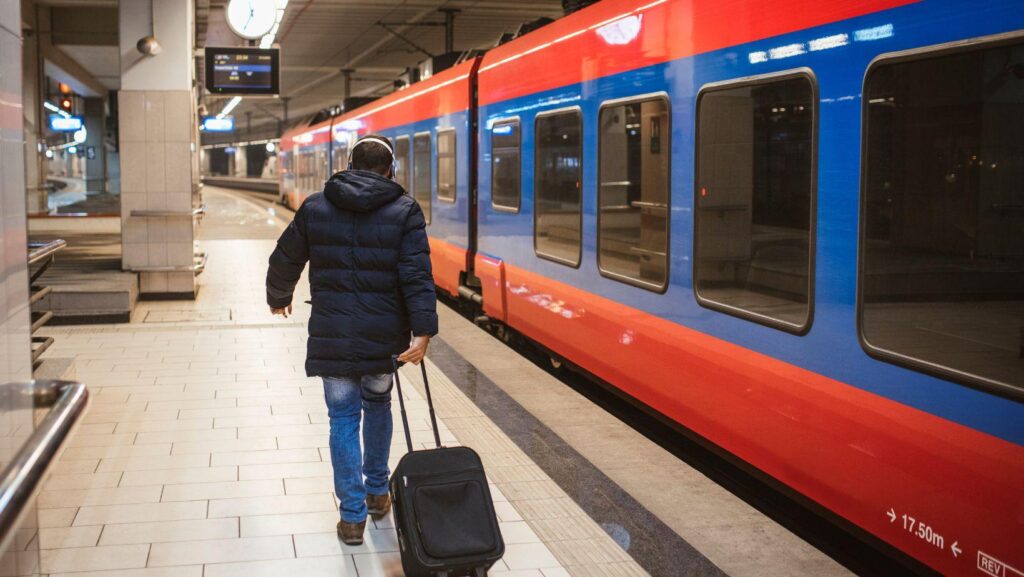
You are standing on a platform in Munich at half past ten at night, backpack on one shoulder, with a ticket that cost less than you feared and a doubt about whether this is a smart saving or a poor night’s sleep.
The overnight train is a fair fare for a solo traveler mainly when you pay for a single cabin. A shared couchette saves money at the cost of sleep, while the daytime train plus a hotel night wins only if arriving rested matters more than the cash. This piece compares the three realistic options from Germany or Switzerland to Vienna on extra cost, hotel savings, sleep and the first morning. Prices are typical estimates, so check the operator for your exact date. Evenings after arrival can stay relaxed, from a dinner out to a few rounds at One Casino within a budget set in advance. Prices are typical estimates, so check the operator for your exact date.
Three ways to reach Vienna side by side
The three options differ less in the base ticket than in what surrounds it. The table shows the trade-offs:
|
Option |
Extra cost on top of base ticket |
Hotel night in Vienna |
Sleep |
Arrival in Vienna |
|
Shared couchette |
About 20 to 40 euros (estimate) |
Saved |
Broken, in a compartment of four to six berths |
Early morning |
|
Single sleeper cabin |
About 80 to 150 euros (estimate) |
Saved |
Private, with your own light and temperature |
Early morning |
|
Daytime train with one hotel night |
No sleeper supplement, but a hotel of about 90 to 150 euros (estimate) |
Paid |
Full night in a bed |
Afternoon or evening |
The shared couchette and what it really costs you
The couchette is the cheapest bed on the route, and it asks the most of you. Bunks are stacked in one compartment shared with strangers. Late bookings often leave the upper bunk, with little room to sit upright.
Finding your place is simple but easy to fumble at night. Check the carriage number against your booking, and the attendant may confirm your name before you settle in. A friend who took this route in the dark said the first ten minutes felt like squeezing onto a crowded lifeboat.
What the extra fee buys
The supplement is usually small compared with a saved hotel night. A 30 euro supplement against a hotel bill of 90 to 150 euros leaves a clear gap.
Savings feel real only if your plans begin later in the day. Last autumn, a colleague took a couchette and said it worked because she had nothing until the afternoon. With a meeting at nine the next morning, she would have paid for a bed in town.
How it feels to sleep there
Other passengers keep their own schedules, so expect a snorer, an early riser with a reading light, or someone who unpacks at midnight. Corridor lights stay dim, and doors open at every station. Pack these before you board:
- Earplugs
- An eye mask
- A light cotton sleep sheet, since the bedding is basic and the compartment can run warm
- A snack for the early wake-up
Most people sleep in fragments rather than through the night. The first hour after the 5 or 6 a.m. wake-up is usually the grimmest part of the trip, so a plan for that hour helps more than a list of sights.
The single sleeper cabin and when the price makes sense
A private cabin lets you set the light, the temperature and the wake-up time. Many cabins have a small washbasin, enough for a quick wash before arrival. The price is higher, but this is the option that most often makes the hotel comparison a fair fight.
What the price looks like next to a hotel
On paper the cabin and a budget hotel night land in a similar range, so the decision often comes down to whether you would pay for a bed in Vienna at all. Arriving around 6 a.m. also means a luggage locker at the main station, which adds a few euros the spreadsheet tends to miss.
How it feels to wake up in Vienna
Wien Hauptbahnhof is a good place to arrive early, since the station is open and the first trams are running. Document checks at the border can still happen on some routes and may wake you briefly, so a cabin is private but not always uninterrupted.
The daytime train and one hotel night
This option avoids the sleeper supplement entirely. The daytime route from Munich usually runs via Salzburg and along the Danube near Linz, so you see the Alps and the river in daylight.
You pay for a full hotel night in Vienna, but you arrive with a bed to check into, a shower and a plan for the morning. That suits solo travelers who work the next day or who sleep badly on trains.
Verdict by reader type
A single cabin is the only overnight bed that counts as a fair fare for most solo travelers, and a shared couchette is fair only if you already sleep through noise. The right choice depends on your budget and how much rest you need:
- Tight budget and you sleep through anything: take the shared couchette, pack earplugs and an eye mask, and accept a hard first morning.
- Tight budget and you sleep lightly: take the daytime train with a cheap hotel night, because a bad night costs more than the saving is worth.
- Want the night train but need rest: pay for the single cabin, which makes the overnight option a fair fare for most solo travelers.
- Want the views and an afternoon arrival: take the daytime train, since you give up one night on a train and gain a full day of scenery and a settled arrival.
Before you book, check the operator’s timetable for your exact date and compare the cabin supplement with the hotel price you would actually pay. A light sleeper should pay for the cabin. Others may find the couchette fair if they pack earplugs and accept an early, rough arrival.