
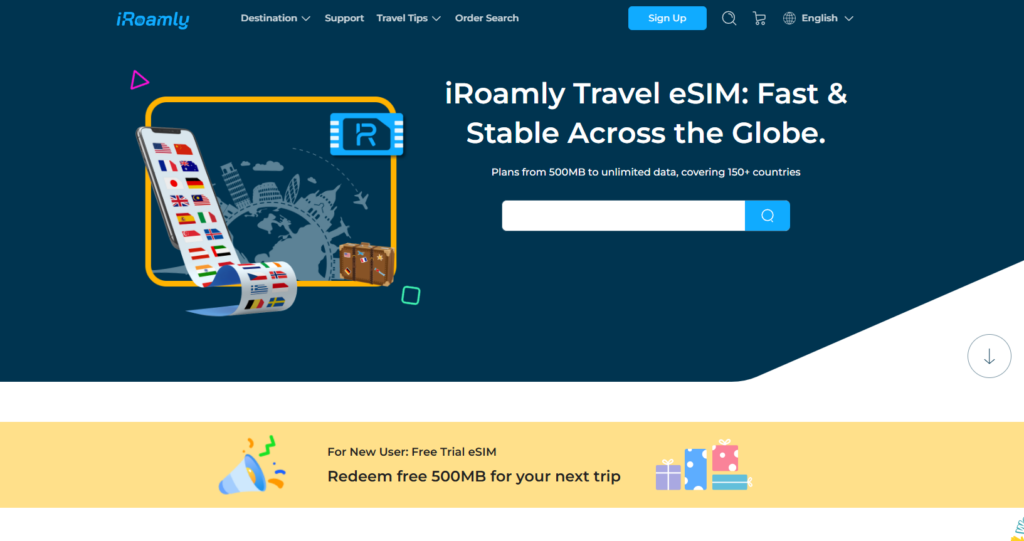
The moment you step off a plane in a country where your carrier doesn’t operate, you face a choice: pay your home provider’s roaming rates and hope the bill doesn’t ruin your budget, or find a local SIM and spend your first hour in a foreign country hunting for a shop that’s open. Neither option feels good. After a decade of international travel, I’ve done both more times than I care to count. So when I heard about a service that promised to skip the physical card entirely, I was skeptical. Iroamly esim claimed to offer something different: data, when you land, without the airport kiosk. I tested it across two weeks in Europe and Turkey to see if the promise held up.
The Setup: A Three-Step Flow That Rewards Preparation
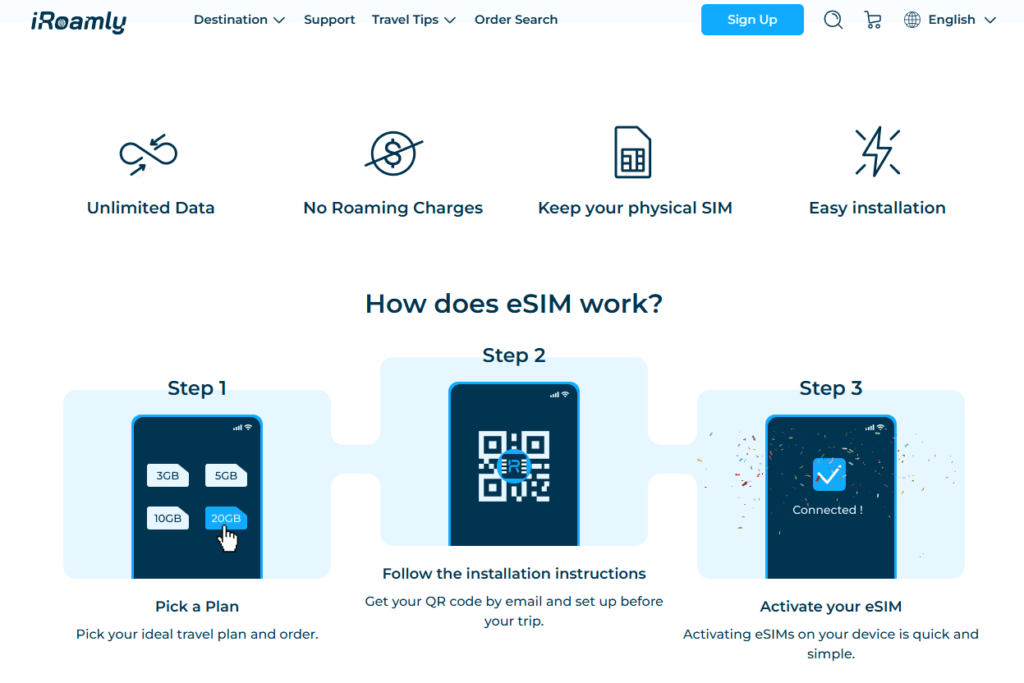
The installation process is deliberately short. No complicated registration, no waiting for delivery, no physical SIM to insert. The entire flow fits into three steps, each with specific execution details that determine success or failure.
Step 1: Choose and Purchase
The purchase page presents three plan categories: Daily plans with fixed data, Total plans with a full data volume, and Unlimited options. All allow hotspot sharing, which isn’t standard among travel eSIM providers. I selected a full data volume package for Europe and a dedicated plan for Turkey. After payment, the eSIM details arrived in my inbox within seconds—a QR code and a manual activation key.
Step 2: Install Before You Travel
The guide recommends installing the eSIM a day or two before departure, while you have a stable Wi-Fi connection. Scanning the QR code on my iPhone installed the profile without any problems. I labeled it “Travel Data” to keep it distinct from my primary line. The key instruction: keep data roaming disabled on your primary SIM during installation. This step alone prevents accidental charges from your carrier later.
Step 3: Activate When You Arrive
After landing, I opened my mobile settings and enabled data roaming for the iRoamly line only, leaving my primary SIM intact. The eSIM automatically connected to a local network. The validity counter started from the first successful connection, not from the time of purchase or installation. This timing logic protects you if you install early; the clock doesn’t start until you actually use the service.
Urban Testing: Istanbul’s Crowded Corridors
The true test of any mobile service isn’t speed in an open field—it’s performance in places where networks get hammered. Istanbul’s Grand Bazaar, with its stone corridors, dense crowds, and thick walls, is exactly that kind of place.
Navigation and Messaging: The Basics That Matter
In the bazaar’s busiest sections, the connection maintained a stable 4G link. Maps loaded without delay, voice messages sent instantly, and messaging apps worked consistently. For the core functions that keep a traveler oriented and connected, the performance was indistinguishable from what I’d expect at home.
Video Calls: Stable but Not Flawless
Video calls to check in with family held steady, though occasional pixelation appeared during peak afternoon hours when the bazaar was most crowded. The connection never dropped entirely, but the quality fluctuated with network congestion—a predictable limitation of any mobile service in high-density tourist areas.
Social Media and Streaming: Consistent Enough
Scrolling through social media, uploading photos, and streaming short videos all worked without noticeable delay. For travelers who document their trips in real time, the service kept up with the pace of the day.
Coastal Testing: Moving Beyond the Cities
Travel doesn’t stop at city limits. I took the connection along the Turkish coast, through smaller towns where local infrastructure is thinner.
Smaller Towns: Slower but Reliable
In coastal communities away from major urban centers, speeds occasionally dropped from 4G to 3G in spots. Basic functions—maps, email, messaging—continued working without interruption. For travelers planning to work from cafes in less touristy regions, the connection proved sufficient for email and light browsing.
Remote Areas: The Limits of Partner Networks
In the most remote stretches of the journey, the connection thinned noticeably. Large file uploads required patience or a stronger signal area. This isn’t a failure of the service so much as a reality of any network that relies on local telecom partners. The result may vary depending on your destination and the local carrier’s infrastructure.
Cross-Border Transfers: Seamless Transitions
For trips spanning multiple countries, regional eSIM options eliminate the hassle of buying separate plans for each border crossing. The service automatically connects to the local partner network in each country. In my testing across three Mediterranean locations, the transition was seamless—no manual switching, no reinstallation, no unexpected downtime.
The Free Trial: A Risk-Free Entry Point
Before committing to a paid plan, new users can claim a free 500MB eSIM covering over 100 destinations, valid for one day, with no credit card required. The trial is available for countries including Turkey, the United States, Japan, Thailand, the UK, and the UAE. You can request it through the website or download the iOS/Android app.
What the Trial Actually Tells You
That single day of free data accomplished three things in my testing:
It confirmed device compatibility. Not every phone supports eSIM, and even among supported devices, carrier locks can interfere. The trial let me verify that my phone recognized the eSIM profile before I spent any money.
It demonstrated local network performance. iRoamly partners with local telecom operators in each country, and network quality varies by destination. The trial gave me a real-world sample of speeds and stability in my specific travel location.
It removed setup anxiety. Installing an eSIM for the first time can feel unnerving. The trial walked me through the same activation flow I’d use for a paid plan, so when I was standing in a foreign airport with a full-priced package, I already knew exactly what to do.
The 500MB Reality Check
In practical terms, 500MB covers about an hour of YouTube, sixty minutes of social media scrolling, or thirty minutes of video calling. It’s enough to navigate from the airport to your hotel, send messages, and test the connection. It is not enough for streaming, heavy photo uploading, or remote work. The trial’s purpose is verification, not vacation data.
The Turkey Plan: A Dedicated Option
For travelers visiting Turkey specifically, the turkey esim page offers dedicated single-country plans that avoid the need to sift through regional packages. Unlimited daily plans start at $2.50 per day, with high-speed 4G/5G, QR code delivery, and hotspot support. The pricing is transparent—no throttling after a few gigabytes, no surprise overage fees.
Where the Service Shows Its Limits
No travel connectivity solution is flawless, and this one has its own set of limitations worth acknowledging.
Data-Only, No Native Calls or Texts
The service provides data only—no native phone number for calls or SMS. If you need to receive banking verification codes via text or make traditional phone calls, you’ll need to rely on VoIP apps. This wasn’t a dealbreaker for me, but it’s a limitation that could matter for travelers who depend on two-factor authentication.
Coverage Quality Depends on Local Partners
As an eSIM reseller that partners with local telecom operators rather than operating its own towers, network quality varies by country and partner. In my testing, performance in one rural area dropped noticeably compared to urban centers. The result may vary depending on your destination and the local carrier’s infrastructure.
Installation Must Happen Before Departure
The requirement to install the eSIM before arriving at your destination means you can’t purchase and activate it on the go if you forget. This is less a flaw and more a constraint of how local network registration works, but it’s worth remembering: install it at home or in transit, and you’re set; forget, and you’re out of luck until you find Wi-Fi.
Support Response Times Can Vary
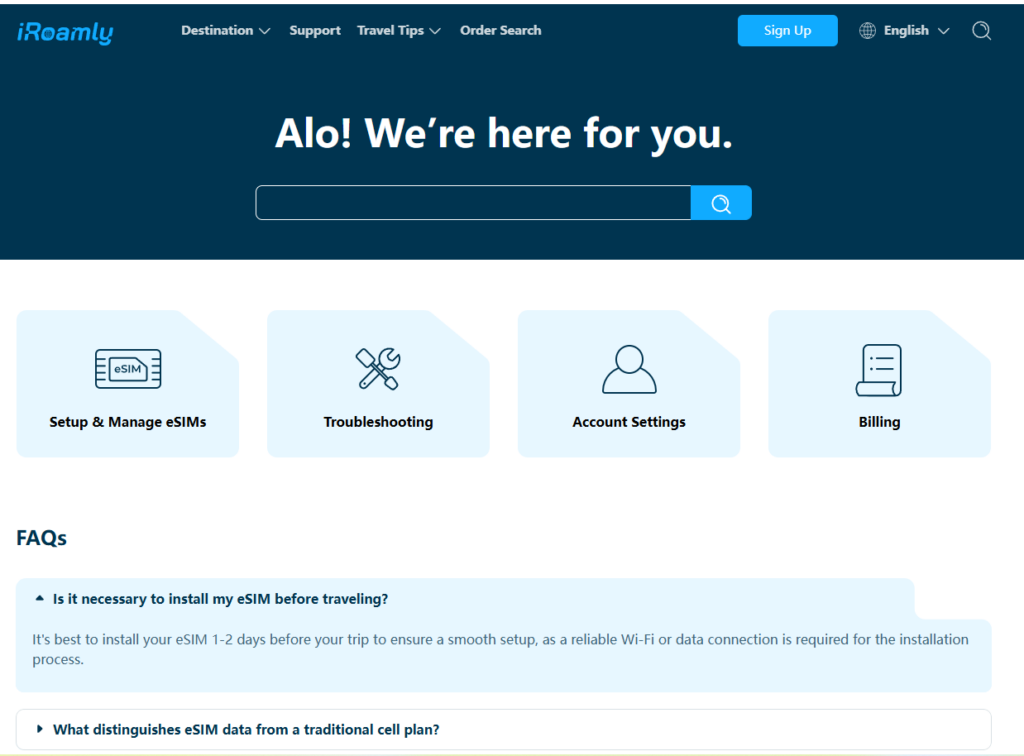
While some users report fast and responsive customer support, email support can sometimes take time to respond. For urgent connectivity issues mid-trip, this delay could be frustrating. In my experience, the installation and activation were smooth enough that I never needed support, but travelers who encounter unexpected problems should plan accordingly.
Who This Service Actually Works For
From a practical user perspective, the service doesn’t try to be everything. It focuses on quick purchase, early installation, and clear activation times. It’s best suited for:
- Digital nomads moving between countries who need flexible plan types and unlimited hotspot sharing.
- First-time eSIM users who want a free trial to test compatibility before spending money.
- Travelers to Turkey who need a dedicated plan and understand the pre-installation requirement.
It’s less ideal for travelers who need native calling and SMS capabilities, those visiting countries where the local partner network is weak, or anyone who prefers to figure out connectivity after arrival rather than before departure.
The service operates with a clarity that’s increasingly rare in the travel connectivity space. The three-step flow—select, install before departure, activate on arrival—is simple enough to remember without notes, and the free trial removes the guesswork about whether your device will work. It won’t be the right fit for every traveler, but for those who value predictability, transparency, and a setup process that doesn’t require a degree in network engineering, it delivers exactly what it promises: data, when you land, without the surprises.