
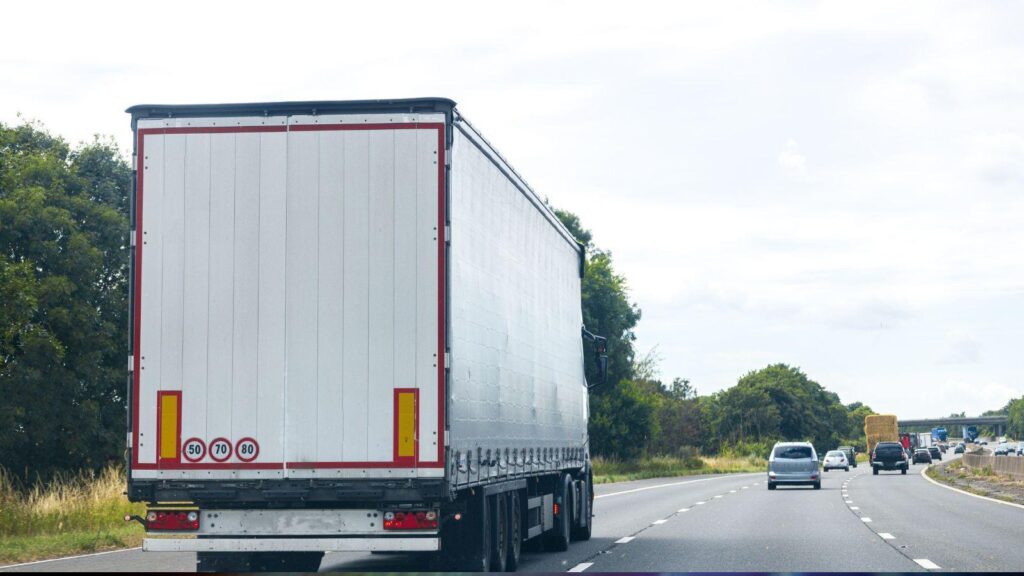
Picture yourself driving down the highway next to a fully loaded 18-wheeler. Your everyday passenger car weighs roughly 4,000 pounds. The commercial truck beside you can weigh up to 80,000 pounds. This massive size and weight disparity creates a “Goliath” scenario where the laws of physics are heavily stacked against the commuter.
When things go wrong, the outcomes are tragically one-sided. In fatal two-vehicle crashes between a large truck and a passenger car, 97% of the fatalities are occupants of the passenger vehicle.
The safest approach is understanding how these risks develop before they lead to a collision. While defensive driving can reduce the chances of an accident, crashes involving commercial vehicles often leave people facing complex legal and insurance issues, making it important to understand when a truck accident lawyer may become part of the recovery process. Knowing what to expect after a serious crash is just as important as learning how to avoid one.
Stopping Distance
How long does it actually take for a fully loaded semi-truck to stop? The math is staggering. At 65 mph, it takes the length of about two football fields to bring an 18-wheeler to a complete stop.
That 525-foot metric breaks down into three distinct phases. First is perception time, which is the split second it takes the driver to recognize a hazard. Second is reaction time, or the physical movement of moving a foot to the brake pedal. During just these two seconds at 65 mph, the truck has already traveled nearly 200 feet.
Finally, there is the actual braking distance. Unlike passenger cars with instant hydraulic brakes, commercial trucks use air brakes that take a moment to engage. Once they do, the massive momentum of an 80,000-pound load physically fights the braking process.
This is exactly why cutting off a semi-truck is incredibly dangerous. When you merge tightly in front of a truck and hit your brakes, you steal their reaction distance. Always leave plenty of space—at least a few car lengths—when merging in front of a commercial vehicle.
How Weather Impacts Stopping Distance and Maneuverability
Rain, snow, and ice exacerbate the already dangerous physics of a commercial truck. Wet roads reduce tire traction, meaning that a 525-foot stopping distance can easily stretch much farther during a rainstorm.
When a truck is forced to brake suddenly in poor weather, they face the severe risk of hydroplaning or jackknifing. A jackknife occurs when the truck’s cab slows down faster than the trailer behind it. The trailer’s momentum pushes it sideways, sweeping across multiple lanes of traffic and crushing anything in its path.
Wind presents an entirely different set of hazards. An empty 53-foot dry van trailer acts like a massive sail in high winds. Gusts can easily cause severe trailer sway or even push a truck completely onto its side. To stay safe in foul weather, double your following distance and avoid driving parallel to trucks on open, windy highways.
Identifying and Avoiding the “No Zones” (Blind Spots)
Every vehicle has blind spots, but commercial trucks have massive visibility voids called “No Zones.” These danger areas exist on the front, rear, and both sides of the truck.
Because truck drivers sit high up in the cab, they cannot see a passenger car tucked tightly against their bumper or riding right below their passenger window. The golden rule of thumb for commuters is simple: If you cannot see the truck’s side mirrors, the driver absolutely cannot see you.
Driving alongside a truck for extended periods is a gamble you do not want to take. If a hazard appears in the truck’s lane, the driver might be forced to swerve into your lane.
Lingering in the No Zones also exposes you to mechanical failures. Commercial truck tires endure immense stress, and blowouts are common on the highway. If a heavy truck tire blows out while you are driving next to it, large chunks of heavy tread can smash through your windshield or force your car off the road.
Actionable Strategies for Sharing the Road Safely
Understanding the physics and blind spots of heavy trucks is only the first step. You have to translate that knowledge into practical driving habits.
The Federal Motor Carrier Safety Administration (FMCSA) actively addresses this through their “Our Roads, Our Responsibility” campaign. This initiative provides national guidelines for passenger vehicles, teaching everyday drivers how to anticipate hazards and navigate safely around commercial motor vehicles.
Applying these guidelines to your daily commute takes the anxiety out of driving near 18-wheelers. Here is exactly how to handle the most common highway situations.
The Safest Way to Pass a Commercial Vehicle
When you need to pass a large truck, always do so on the left side. The driver’s blind spot is slightly smaller on the left, making it much easier for them to spot your car in their mirrors.
Once you decide to pass, do it purposefully. Maintain a steady, consistent speed to get through the No Zone as quickly and safely as possible. Never match the truck’s speed and linger in the lane beside them.
After passing, do not immediately cut back over into the right lane. You must account for their required stopping distance. Wait until you can see the entire front cab of the truck—including their headlights—in your rearview mirror before safely merging back into their lane.
Anticipating and Navigating Wide Right Turns
Large trucks require a massive turning radius. When a 53-foot trailer turns a corner, the rear wheels take a much shorter path than the front wheels. This mechanical reality is known as off-tracking.
To prevent their rear wheels from running over the curb, hitting a fire hydrant, or crushing pedestrians, truck drivers often swing wide into the left lane before executing a right turn. This maneuver frequently creates an inviting, empty space between the truck and the right-side curb.
Never squeeze your passenger car into that gap. This is commonly referred to as a “suicide squeeze.” As the truck completes the turn, that gap closes rapidly, trapping and crushing any car caught inside. Always pay close attention to commercial turn signals at intersections. Give trucks the space they need, even if it means leaving the entire intersection clear so they can complete their maneuver safely.
Conclusion
Sharing the road with massive commercial vehicles does not have to be a stressful experience. It simply requires a proactive mindset, patience, and a clear understanding of their physical limitations.
By remembering a few simple rules, you can dramatically decrease your crash risk. Keep your car completely out of the blind spot No Zones. Respect the reality of a 525-foot stopping distance by giving trucks plenty of room to brake. When you do need to pass or navigate an intersection, do so predictably and safely.